Land Protection & Expansion
Conservation Policy
Wildlife Conservation
Environmental Stewardship
Durability
& Legacy
Access
& Equity
Total
Score

JOE BIDEN
46th President of the United States (2021-2025)
Biden’s conservation record centers on restoration - undoing rollbacks, reaffirming tribal leadership, and reconnecting climate policy to land protection through the 30 x 30 initiative.
Bears Ears and Grand Staircase Restoration
In 2017, in what has been described as, "the largest rollback of federal land protection in U.S. history," the Trump administration significantly reduced both the size and the ability to protect the landscape from development. Biden restored the boundaries and protections to both monuments in October 2021. Over the last decade, Bears Ears (Obama, 2016) and Grand Staircase-Escalante (Clinton, 1996) have been at the center of controversy around the role and importance of recognizing Native voices, federal land designations & protections, and state's rights.
30x30 Initiative to America the Beautiful
Launched in 2021, this plan aims to conserve 30 percent of U.S. lands and waters by 2030 through voluntary, locally driven projects. The initiative connects private lands, tribal territories, and federal holdings into a unified conservation network. Its success would represent the largest landscape-scale restoration effort in U.S. history.
Land Protection & Expansion
Conservation Policy
Wildlife Conservation
Environmental Stewardship
Durability
& Legacy
Access
& Equity
Total
Score
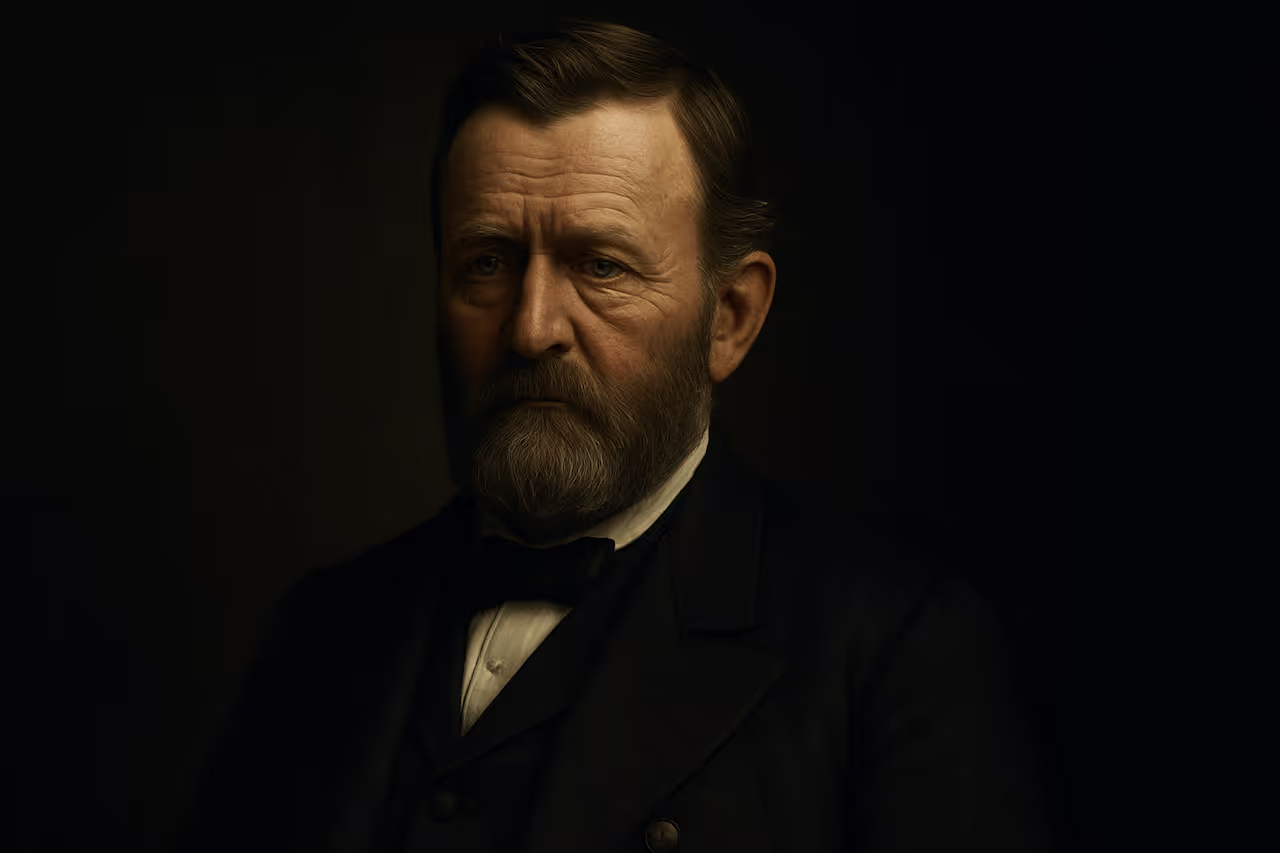
ULYSSES S GRANT
18th President of the United States (1869-1877)
Grant’s Yellowstone Park Act (1872) created the first national park on the planet and introduced the legal idea that land could be reserved from sale for public enjoyment.
Yellowstone: The Global Template for National Parks
In 1872, Yellowstone became the first place on Earth preserved for its intrinsic value. The act inspired a global conservation movement - today, more than 100 countries maintain over 4,000 national parks modeled on Grant’s example. It proved that natural wonder could be a matter of national identity.
Early Fisheries Science
In 1871 Grant established the U.S. Fish Commission to study declining fish stocks. It evolved into today’s Fish and Wildlife Service, managing 95 million acres of refuges and hatcheries. The agency’s data-driven methods set the stage for modern wildlife management.
Land Protection & Expansion
Conservation Policy
Wildlife Conservation
Environmental Stewardship
Durability
& Legacy
Access
& Equity
Total
Score
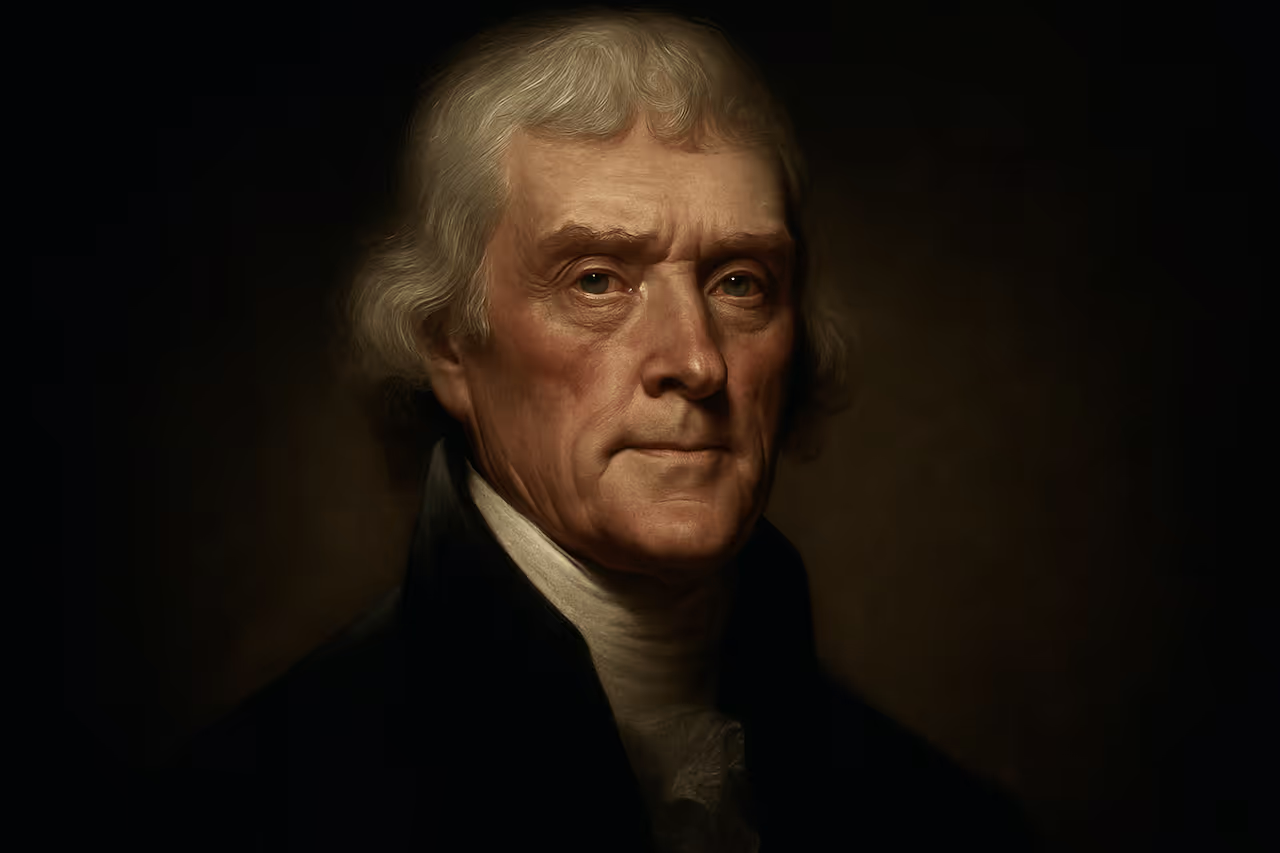
THOMAS JEFFERSON
3rd President of the United States (1801-1809)
Jefferson doubled the size of the nation with the Louisiana Purchase, adding 530 million acres for $15 million - or roughly three cents an acre. He also launched the first federal scientific survey, laying the groundwork for future land inventories.
The Corps of Discovery | The Lewis & Clark Expedition
Jefferson commissioned Meriwether Lewis & William Clark to explore and document the new territory from 1804 to 1806. Their detailed journals catalogued over 120 animal species and 180 plants new to science, creating the first ecological inventory of the West. Those notes still guide research in places like the Missouri River Breaks and the Pacific Northwest. The expedition introduced the American public to the scale and diversity of the continent - a prerequisite to valuing it.
Science, Survey, & the Idea of the American Landscape
Jefferson’s obsession with measurement - latitude, soil, flora - sparked the nation’s first federal mapping programs and the Public Land Survey System which still defines property boundaries today. His belief that democracy required an educated public led to a surge of natural-history collections and universities teaching geology and botany. In setting that intellectual groundwork, Jefferson made it possible for later generations to argue that nature had civic value, not just economic potential.
Land Protection & Expansion
Conservation Policy
Wildlife Conservation
Environmental Stewardship
Durability
& Legacy
Access
& Equity
Total
Score

BILL CLINTON
42nd President of the United States (1993-2001)
Clinton merged ecology and economics, protecting landscapes without halting their use. His administration added 20 monuments and advanced the Roadless Rule, shielding 58 million acres of national forest from new roads.
Roadless Area Conservation Rule
Issued in Clinton’s final month, the rule protected 58 million acres of national forest from new road construction or logging. It remains one of the largest single land protections in modern history, covering nearly one-third of all national forest land. Despite repeated challenges, courts have consistently upheld it, proving its durability. The rule redefined conservation to include what doesn’t get built.
California Desert Protection Act
This act added 7.6 million acres to the national park system, converting Death Valley and Joshua Tree into full national parks and establishing Mojave National Preserve. It protected rare desert ecosystems, fossil beds, and wildlife corridors that still face development pressure today. The law doubled the protected area of the Mojave Desert, safeguarding a unique biome found nowhere else on Earth.
Land Protection & Expansion
Conservation Policy
Wildlife Conservation
Environmental Stewardship
Durability
& Legacy
Access
& Equity
Total
Score

RICHARD NIXON
37th President of the United States (1969-1974)
Nixon signed the laws that built modern environmental governance, creating the EPA, ESA, and NEPA. These acts replaced ad-hoc conservation with enforceable standards.
Environmental Protection Agency (EPA)
In December 1970, Nixon created the EPA by executive reorganization, consolidating 15 offices under one scientific authority. Within its first year, the agency set national air and water standards and banned DDT. The EPA’s enforcement powers reshaped industries and urban health, cutting lead emissions and smog within a decade. It institutionalized environmental accountability across government.
Endangered Species Act (ESA)
Nixon’s ESA gave the federal government power to protect species and habitats from extinction - an unprecedented legal reach. It currently safeguards more than 1,600 species and has prevented extinction for over 99 percent of those listed. The ESA’s “critical habitat” provision continues to influence everything from dam construction to highway routing, balancing economy with ecology.
National Environmental Protection Act (NEPA)
NEPA, signed in 1970, requires federal agencies to evaluate environmental impacts before approving major projects. It introduced the Environmental Impact Statement, a concept now standard in over 160 countries. NEPA didn’t stop development - it made the process transparent. Half a century later, it remains the public’s strongest legal tool to challenge unsustainable federal projects.
Land Protection & Expansion
Conservation Policy
Wildlife Conservation
Environmental Stewardship
Durability
& Legacy
Access
& Equity
Total
Score

BARACK OBAMA
44th President of the United States (2009-2017)
Obama re-energized the Antiquities Act, designating or expanding 34 monuments that protected more than 550 million acres of land and sea - the largest total in U.S. history. He tied conservation to inclusion, elevating Indigenous voices and under-represented histories.
Monument Designations & Marine Protection
Obama used the Antiquities Act 34 times, protecting more than 550 million acres—more than any other president. His expansion of Papahānaumokuākea Marine National Monument created the largest protected marine area on Earth at the time, covering 582,578 square miles. He also established Bears Ears National Monument in partnership with five tribal nations, setting a precedent for Indigenous-led stewardship. Together, these moves secured landscapes and seascapes critical to biodiversity and cultural heritage.
Climate & Conservation
Obama tied public-land management directly to climate policy through his Climate Action Plan. He increased renewable energy projects on public lands while setting stricter methane and CO₂ standards. His administration added resilience zones to manage forests as carbon sinks - turning conservation into climate strategy. Those frameworks continue to guide federal land planning today.
Every Kid in a Park Program
Launched in 2015, Every Kid in a Park gave every fourth grader in America free access to all national parks, refuges, and public lands for a full year. The program reached more than 10 million children in its first four years, removing financial and logistical barriers that often keep urban and low-income families from the outdoors. It wasn’t just about entry fees; it reintroduced a generation to the idea that public lands belong to everyone. The initiative also directed transportation grants to schools in underserved communities, bridging the gap between policy and experience. Re-established and expanded under later administrations, it continues to shape youth engagement and outdoor-education programs nationwide—a quiet but lasting legacy of inclusion.
Land Protection & Expansion
Conservation Policy
Wildlife Conservation
Environmental Stewardship
Durability
& Legacy
Access
& Equity
Total
Score

LYNDON B JOHNSON
36th President of the United States (1963-1969)
LBJ’s environmental record mirrors his social agenda—expansive, idealistic, and enduring. He treated clean air, water, and open space as civil rights.
The Wilderness Act of 1964
Johnson’s signature on the Wilderness Act preserved 9.1 million acres in 54 wilderness areas and created a framework for future expansion. That system has since grown to more than 111 million acres across 44 states. The act established the “untrammeled” ideal - land left to nature’s control - and remains one of the most pure conservation laws ever written. It was the first time Congress defined wilderness as a permanent national asset and not a resource to be used.
Land & Water Conservation Fund
The LWCF redirected royalties from offshore oil and gas drilling into parks, trails, and recreation access. Over six decades, it has funded more than 45,000 local projects and every national park. Its annual investment - up to $900 million - is now permanently authorized. The Fund represents a rare bipartisan success: using resource extraction revenue to expand public opportunity.
Wild and Scenic Rivers Act
This law created a new class of protection: entire rivers, not just fragments of land. Johnson’s initial list of eight rivers has since grown to 226, totaling more than 13,000 miles of free-flowing water. It redefined conservation to include movement, sound, and flow - the living systems connecting the land.
Land Protection & Expansion
Conservation Policy
Wildlife Conservation
Environmental Stewardship
Durability
& Legacy
Access
& Equity
Total
Score

FRANKLIN ROOSEVELT
32nd President of the United States (1933-1945)
Franklin Delano Roosevelt (FDR) reshaped conservation literally from the ground up. His New Deal Programs put people to work rebuilding the land through tree planting, erosion control, and park construction - making conservation a public project.
Civilian Conservation Corps (CCC)
The CCC was as much a social experiment as a conservation project. Between 1933 and 1942, it employed more than three million young men who built roads, fire towers, bridges, and trails in over 800 parks. They planted an estimated three billion trees, stemming erosion and rebuilding forests across the Dust Bowl states. Many of the stone cabins, ranger stations, and amphitheaters still in use today were CCC projects. The Corps turned environmental restoration into national recovery - proof that healing the land could heal the economy.
Soil Conservation Science
Triggered by the ecological collapse of the Dust Bowl, this law created the Soil Conservation Service (now NRCS). It introduced contour plowing, shelterbelts, and crop rotation to millions of farms. Within a decade, soil loss in the Great Plains dropped by more than 60 percent. The Act reframed erosion control as both environmental and national defense - protecting the country’s agricultural base from collapse.
Park System Reorganization
FDR added 140 wildlife refuges, two national parks, and eleven monuments, but his real innovation was structural: he merged them into a cohesive system under the Department of the Interior. He also established the first national seashores and expanded federal management into coastal zones. The modern shape of the National Park and Refuge Systems emerged directly from his tenure.
Land Protection & Expansion
Conservation Policy
Wildlife Conservation
Environmental Stewardship
Durability
& Legacy
Access
& Equity
Total
Score
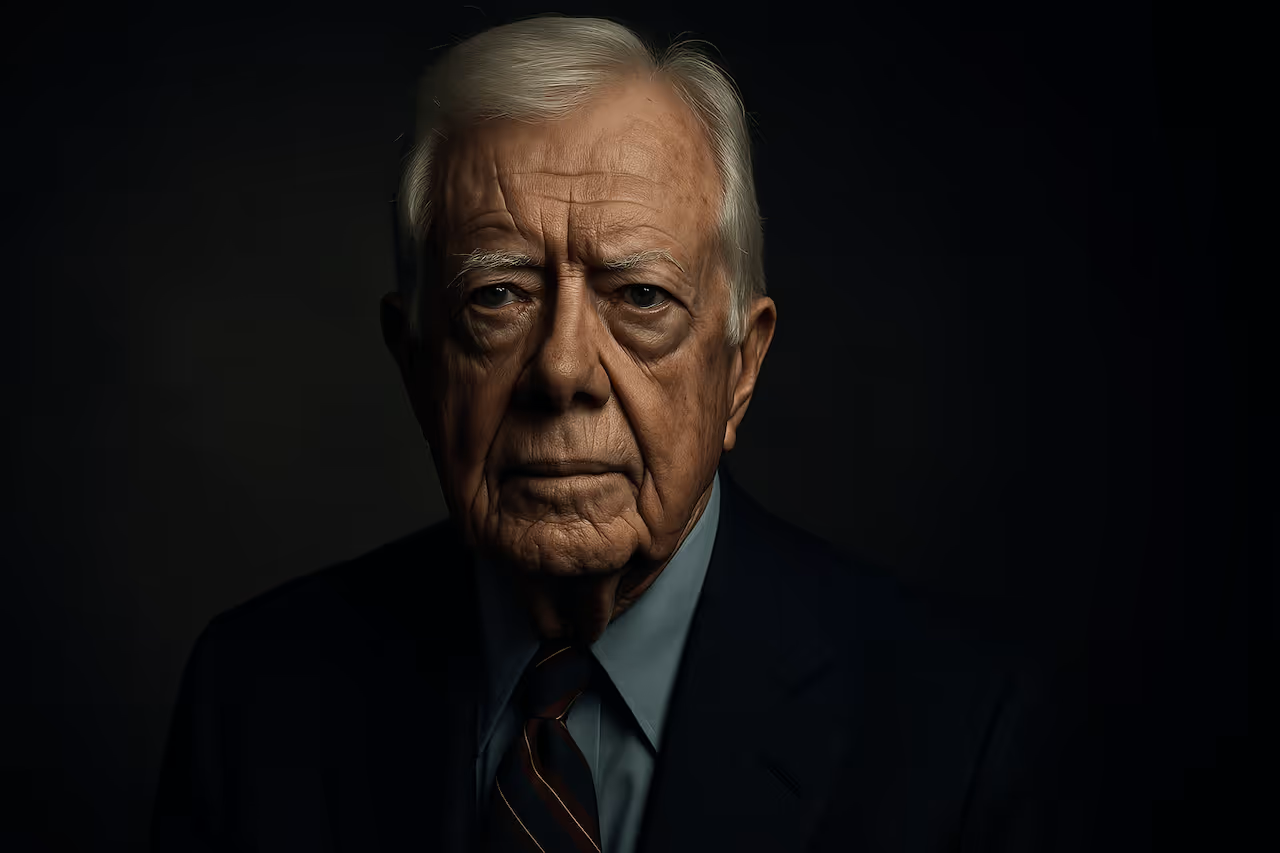
JIMMY CARTER
39th President of the United States (1977-1981)
Carter protected more land in a single, four-year term than any other president - and did so while affirming the rights of Alaska Native communities to live, hunt, and fish according to traditions that have sustained those landscapes for millennia. He placed more than 100 million acres under protection, securing entire mountain ranges, river systems, and coastlines. Yet his vision reached beyond acreage: he redefined conservation as a partnership between people and place. By recognizing subsistence as a lawful, cultural right, Carter made space for Indigenous leadership inside federal policy.
Alaska National Interest Lands Conservation Act (ANILCA)
ANILCA doubled the size of the National Park System, creating 10 parks, 25 refuges, and 47 wilderness areas. It safeguarded entire mountain ranges, tundra plains, and salmon rivers - ecosystems now critical to global biodiversity. Those lands, roughly one-sixth of the U.S., form the planet’s largest continuous block of intact wilderness.
Subsistence & Co-Management
For the first time, federal law recognized Indigenous subsistence hunting and fishing as protected uses. That balance of ecology and culture pioneered modern co-management, now used from Hawaii to Maine. Carter’s model replaced exclusionary preservation with partnership-based stewardship.
The "Midnight Monuments"
When Congress stalled, Carter invoked the Antiquities Act to designate 56 million acres overnight. The backlash was immediate - but it forced Congress to finalize ANILCA. The move cemented the idea that executive power could defend wilderness when politics fails.
Land Protection & Expansion
Conservation Policy
Wildlife Conservation
Environmental Stewardship
Durability
& Legacy
Access
& Equity
Total
Score

THEODORE ROOSEVELT
26th President of the United States (1901-1909)
It's impossible to deny the lasting impact Theodore Roosevelt has had on the American landscape. Often called "The Conservation President," he reshaped America’s perspective on the importance of both protecting and managing forests, waterways, and wildlife. During his time in office, he created the U.S. Forest Service, safeguarded 230 million acres, and launched an unmatched wave of designations - 150 national forests, 51 federal bird reserves, 4 national game preserves, 5 national parks, and 18 national monuments. His blend of science, recreation, and restraint still frames modern land management.
The United States Forest Service
Created in 1905, the U.S. Forest Service, under the guidance of Gifford Pinchot, has become a world leader in the sustainable management, conservation, use, and stewardship of both cultural and natural resources. This action transformed logging and fire control, placing science at the center of policy and agency decisions. Today, 154 national forests - spanning 193 million acres - still operate under Roosevelt’s sustained-yield principles, capturing hundreds of millions of tons of carbon each year, and offer endless recreational opportunities for public lands users.
The Antiquities Act (1906)
"If you won't do it, I will" was the mentality behind the 1906 Antiquities Act. It gave presidents the authority to protect sites of cultural or historical significance without Congress. Roosevelt quickly proclaimed Devils Tower, Montezuma Castle, and El Morro - creating a precedent that has since been used more than 300 times. The Antiquities Act remains the single most flexible conservation tool in federal law.
The National Wildlife Refuge System
Pelican Island (1903) marked the birth of the refuge idea: create habitat to protect animals rather than people. Roosevelt initially expanded it to 50 sites, launching today’s National Wildlife Refuge System consisting of more than 570 sites across the United States.